For most of the last two decades, an investor pricing a site inside Texas Central Park could lean on a simple story: 3,700 acres along Interstate 35, industrial-grade utilities in the ground, a nonprofit landowner willing to move dirt at below-market pricing, and enough remaining inventory that competition for any given tract stayed manageable. That story is no longer accurate. The park has absorbed more than $2 billion of announced capital since 2020, and the composition of that capital, not the headline dollar figure, is what should reshape how a buyer, a developer, or a growth-stage user reads the market today.
The thesis of this post is narrow. Texas Central Park has quietly transitioned from a value-priced greenfield park to a park where institutional build-to-suit demand now sets the tone at the top of the market, while smaller owner-user tracts remain the last real pocket of price discipline. If you underwrite it the way you would have in 2019, you will either overpay for a mid-sized parcel or lose a good one to a buyer who understood the shift.
The Number Behind the Headline Number
The Waco Industrial Foundation reports 19 major announcements in Texas Central Park since 2020, totaling over $2B in investment and 2,600+ jobs. Nineteen deals in roughly six years, inside one park, is not a rounding error. It is a signal that the site-selection consultants working national manufacturing and logistics assignments have added this park to a short list they used to reserve for the I-35 nodes closer to Dallas and San Antonio.
Look at what the announced capital is actually doing:
| Commitment | Scale | What it signals |
|---|---|---|
| Graphic Packaging International paper recycling mill | $1 billion, set to include the plant inside the expanded TIF Zone 4; production expected in 2026, about 230 jobs at roughly $65,000 average | Heavy manufacturing anchor, rail-adjacent, long-duration tax capture |
| Electrolit U.S. production facility | $400 million, 600,000-square-foot greenfield build-to-suit set to open in early 2026 | Consumer-goods manufacturing entering the park for the first U.S. site |
| HOLT CAT acquisition of former Caterpillar Work Tools campus | 200,000+ square feet, $32 million investment, 128 new jobs for heavy equipment service and engine rebuilds | Reuse of institutional-grade industrial space, not new construction |
| S2A Modular mega-factory | 30 acres, roughly $30 million, 200,000-square-foot production facility, 200+ jobs over two years | Mid-market manufacturer choosing Texas Central Park over lower-cost rural sites |
| TSTC WorkSITE training center | $17 million workforce training facility on Wycon Drive, with work expected to begin in October | Public workforce investment placed inside the park, not outside it |
Read the table as a portfolio. You have a billion-dollar recycler, a $400 million beverage plant, a heavy-equipment service campus, a modular home factory, and a workforce training building. The park is no longer aggregating similar tenants. It is diversifying, which is what parks do when they stop selling on price and start selling on execution.
The WIF Model Is Doing Something Most Buyers Miss
The Waco Industrial Foundation is not a private developer. It is a 501c6 nonprofit that has functioned as an economic development driving force in Greater Waco for more than 70 years, and today it holds a portfolio of over 1,100 available acres, spanning multiple industrial parks and all supplied by commercial and industrial grade roads and utilities. The Texas Real Estate Research Center at Texas A&M puts a finer point on the pricing posture: WIF provides land to industrial prospects typically at below-market prices.
A nonprofit selling below market is not a subsidy for every buyer. It is a subsidy for the buyer whose project the Foundation is trying to attract. Underwrite accordingly.
That distinction matters. A build-to-suit user with 200 jobs and $30 million of capex is a very different counterparty at the WIF table than an outside investor accumulating flex acreage on spec. If you are the second buyer, the pricing you will actually be quoted looks more like private-market pricing on the tracts that are left, particularly the tracts closest to the recent institutional announcements. The value is still there, but it is concentrated in a narrower band of the inventory than the old story suggests.
What Your Dollar Actually Buys Right Now
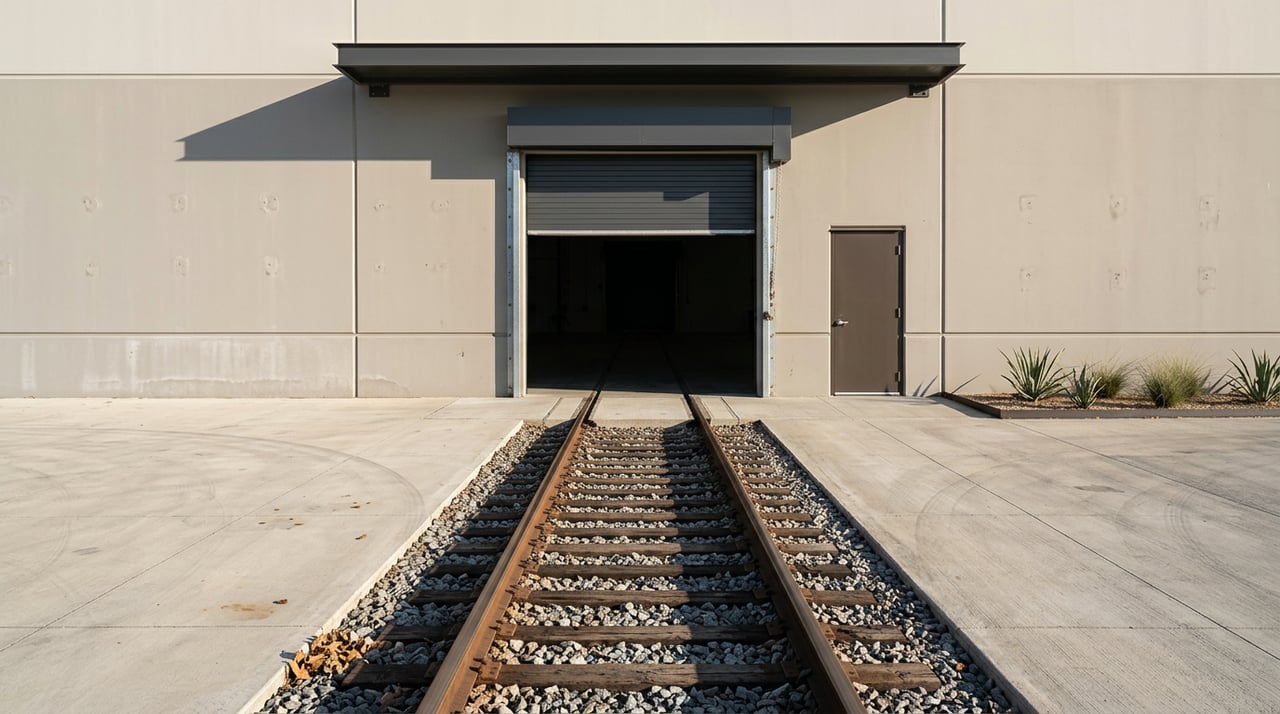
Rail is the first sort. The park sits on the Union Pacific mainline, and specific tracts remain positioned for rail-served users. WIF's Tract 38 near Highway 6/Loop 340 and Highway 84, for example, lists Owens-Illinois and Romark Logistics among nearby tenants, notes the site could be rail served by Union Pacific, and provides 15 to 30 low-cost, buildable acres. That kind of small-to-mid rail-eligible tract is the closest thing left to the old value proposition.
Second sort: adjacency to the WorkSITE. Sites near Wycon Drive are being repositioned around workforce access rather than raw logistics. A LoopNet posting for a nearby parcel notes it sits next to the new WorkSITE, a flagship community-driven industrial training center operated by Texas State Technical College, on a wooded site overlooking Flat Rock Creek which will eventually be developed into a greenspace open to the public. Read that as a soft office and light-industrial submarket forming inside a park that used to be marketed almost entirely as heavy industrial.
Third sort: leased investment product. The park now has stabilized office and flex product trading on cap rates rather than land basis. A 36,385-square-foot building at 601 Texas Central Parkway was recently marketed as fully leased through 2031 with 3% annual increases. That is a very different asset class than a raw tract, and its existence is the clearest evidence that the park is maturing.
The Friction Most Out-of-Market Buyers Miss
Two mechanisms are quietly repricing risk here, and neither shows up on a portal.
The first is TIF Zone 4. Waco expanded the zone by more than 1,000 acres to capture the Graphic Packaging facility, and the Waco Tribune-Herald reports that estimates for the city, McLennan County, and McLennan Community College show the expanded zone would generate more than $300 million in tax revenue before its dissolution date in 2051, money that would build or upgrade roads, sidewalks, water and sewer infrastructure and more in areas officials believe are primed for new development. A buyer who understands where the zone boundary falls, and where the infrastructure spend will actually land, is underwriting a different property than a buyer looking at the same aerial without that overlay.
The second is workforce competition. The TSTC WorkSITE building is being built on land the Waco Industrial Foundation made available in a land swap with TSTC, as a 28,000-square-foot building with space for multi-use labs and offices to provide specialized training for local businesses, particularly industrial operations. With S2A Modular's 200 jobs, Electrolit's 200 skilled professionals and technicians, HOLT CAT's 128 positions, and Graphic Packaging's roughly 230 all ramping in a similar window, a new user should not assume the labor pool that supported the park in 2018 is the pool that will support their pro forma in 2027. The WorkSITE exists precisely because that assumption stopped holding.
FAQ
Is there still meaningful raw inventory in Texas Central Park? Yes, but stratified. WIF's public materials describe an active portfolio of available tracts inside Texas Central Park, Robinson Business Park, and Waco International Aviation Park. Inside Texas Central Park specifically, the remaining opportunities cluster around smaller rail-eligible tracts and the Wycon Drive area near the WorkSITE, rather than large contiguous heavy-industrial pads.
How should a private investor think about competing with build-to-suit users? Do not. Compete on the parts of the park the institutional users do not want: mid-sized flex, adaptive reuse of existing tilt-up space, and infill parcels too small for a 500,000-square-foot program. HOLT CAT's reuse of the former Caterpillar Work Tools building, a 200,000+ square foot industrial campus is the template for that thesis.
Does the TIF zone expansion affect properties outside the Graphic Packaging footprint? Yes, indirectly. Zone 4 revenue is designated for infrastructure improvements across areas officials believe are primed for new development. Sites near planned road, water, and sewer upgrades inside the expanded boundary benefit from public spend the owner does not have to fund.
Underwriting Texas Central Park in 2026 is a different exercise than it was five years ago. The park still rewards disciplined buyers, but the discipline required has changed. If you are weighing a site here, a disposition, or a build-to-suit strategy, Kelly Commercial can walk the specific tract, the specific tenant mix around it, and the specific incentive stack with you. Let's Get Started.