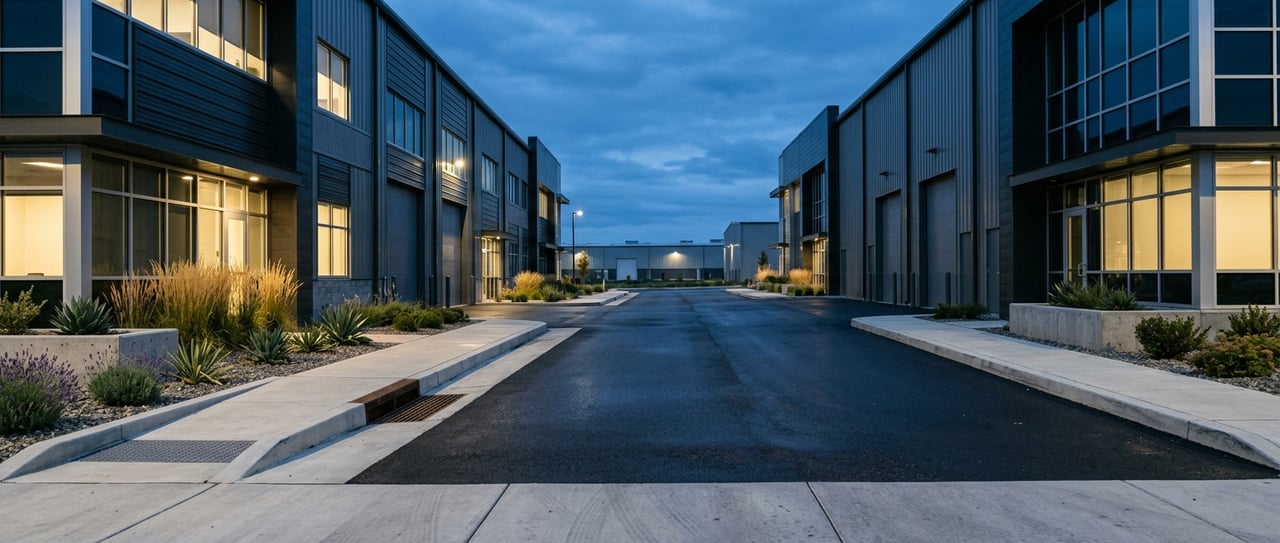
If you are looking for room to grow in Central Texas, Robinson Industrial Park is worth a close look. For many firms, the challenge is finding a site that offers access, utilities, and enough land to plan beyond the next few years. In Robinson, the story is not just location. It is also about a business park that is still taking shape, with major acreage available and infrastructure moving forward. Let’s dive in.
Why Robinson Is Getting Attention
What many people call Robinson Industrial Park is identified in local materials as Robinson Business Park. It sits at the Interstate 35 and Highway 6/Loop 340 interchange in Robinson, just southeast of Waco in central McLennan County.
That location matters because Robinson adjoins Waco at I-35 and sits on the corridor between Dallas and Austin. For growing firms, that puts the park in a practical position for regional operations, supplier access, and customer reach across Central Texas.
Large Acreage Still Available
One of the biggest reasons this park is on the radar is simple: there is still space to build. Local economic development materials describe the site as about 635 acres total, including roughly 175 commercial-zoned acres and more than 460 light industrial acres.
More than 500 acres remain available, with lot sizes ranging from 9 to 60-plus acres. That gives businesses and developers flexibility whether they need a smaller footprint now or a larger site that can support phased growth over time.
A Greenfield Site With Growth Runway
This is not a fully built-out industrial park where only a few leftover parcels remain. Greater Waco and Waco Industrial Foundation materials describe Robinson Business Park as the newest WIF industrial park and a greenfield land inventory.
That distinction is important if you want optionality. A greenfield setting can create more room for site planning, building configuration, circulation, and future expansion than a mature park with limited remaining choices.
Access Supports Regional Movement
For industrial and commercial users, access is usually near the top of the checklist. Robinson has major frontage along I-35, and the city notes that the SH 6/Loop 340 segment from US 77 to I-35 supports commercial land uses and vacant tracts.
TxDOT also describes I-35 as a critical roadway for moving goods, services, and people into the Waco region and across Texas. That kind of corridor positioning can matter if your business depends on efficient truck routes, broad service territory, or regular movement between major Texas markets.
I-35 Improvements Add Context
There is also a longer-term transportation story here. TxDOT’s My35 Waco South project is upgrading about three miles of I-35 from South Loop 340 to 12th Street, with utility and drainage work, frontage-road reconstruction, and a diverging diamond interchange at Valley Mills Drive.
Completion is anticipated in early 2029. While that project is not the park itself, it adds context to the broader corridor and reinforces the ongoing public investment tied to movement through the Waco area.
Infrastructure Is No Longer Just a Future Idea
A key part of Robinson Business Park’s recent momentum is that infrastructure is moving from concept to reality. A 2024 Greater Waco Chamber and TEDC application said the tract had sat largely vacant for nearly 10 years because it lacked a road, even though it had a prime location and on-site utilities.
That changed when Robinson created a TIRZ and, along with Waco Industrial Foundation and McLennan County, funded the first phase of John Bowden Parkway. The same package was tied to more than $10 million in infrastructure improvements, including road, natural gas, electrical, sewer, drainage, and bridge work.
For firms evaluating where to expand, that is a meaningful signal. It shows coordinated public and private effort to unlock the site rather than leaving it as a passive land bank.
Utilities Help the Park Stand Out
Utility capacity is another reason the park is drawing attention. Current park materials say the site is served by transmission-grade utilities.
The park is also described as one of the few industrial parks with access to the WMARSS reclaimed, or purple-pipe, water system. On the local utility side, Robinson lists Oncor for electric distribution, Atmos Energy for gas, and city water and wastewater service.
For industrial users, utility readiness can affect timelines, operating planning, and site feasibility. While each project still needs its own due diligence, the existing utility framework gives the park a stronger foundation than raw land without service support.
Zoning and Planning Offer Flexibility
Growing firms often need more than a good map location. They also need a path through zoning and development review that fits the intended use.
In Robinson, the planning department handles zoning, plats, special exceptions, variances, building inspections, and code enforcement. The city’s rezoning materials list standard designations that include Industrial (I), General Commercial (C-2), Light Commercial (C-1), and Retail/Office (R/O), and the application hub includes Planned Development District rezoning.
That does not mean every use is automatic. It does mean the local framework includes multiple zoning paths that can support different commercial and industrial development approaches, depending on the parcel and the project.
Land Use Priorities Support the Setting
Robinson’s comprehensive planning materials add another useful layer. The city says development should align with the land-use category, and its comprehensive plan notes that light industrial should be separated from residential areas and that medium and heavy industrial should have major highway access.
Those planning priorities fit the basic appeal of the park. They suggest that the site’s highway-oriented position is consistent with the city’s broader land-use logic.
Incentives May Be Part of the Conversation
For some projects, incentives can shape the math. Robinson’s tax-abatement policy allows case-by-case abatements for new facilities and for expansion or modernization, subject to Chapter 312 procedures and reinvestment-zone rules.
Waco Industrial Foundation also says it can offer creative, project-driven solutions and work with public partners to tailor incentive packages. The TIRZ-backed road package is a real example of how that collaboration can work when a project aligns with local goals.
That does not guarantee the same result for every user. It does suggest that expanding firms and developers may find a local environment that is open to practical deal structuring when the project fits.
Early Tenants Validate the Story
A park becomes more credible when actual users choose it. In Robinson Business Park, two announced projects stand out as strong market signals.
Walmart Manufacturing selected Robinson for a $380 million milk-processing plant expected to bring nearly 400 jobs. Waco Economic Development says it was the first anchor tenant in the park.
Metal Finishing Solutions also selected the park for a $20 million project and 80 jobs. The official announcement said the company chose the site for its I-35 location and customer access, and it expects more than 110,000 square feet of manufacturing space.
These announcements matter because they show the park can support more than one type of industrial user. They also reinforce that the park is moving from vision to actual occupancy.
What Types of Firms May Find a Fit
Based on the park’s acreage, frontage, utilities, and zoning structure, Robinson Business Park may appeal to a range of growing firms. Local and regional materials do not set a narrow tenant rule, but the physical setup points to several logical user profiles.
Potential fits may include:
- Contractors needing yard, shop, and office space
- Equipment distributors needing highway access
- Fleet and logistics operators serving Central Texas routes
- Light fabricators looking for utility-supported sites
- Supply-chain related businesses seeking room for future expansion
Waco Economic Development also lists supply chain management among the area’s fastest-growing industries. That broader market context adds support to the park’s industrial appeal.
Why the Timing Feels Different Now
The most compelling reason Robinson Industrial Park is on the radar may be timing. This is no longer just a well-located tract with long-term potential. It is a business park with substantial remaining land, active infrastructure investment, clear highway visibility, utility support, and early anchor users already committed.
For business owners, developers, and investors, that combination can create a different level of confidence. You are not only looking at a future concept. You are looking at a build-out story that is already underway.
What to Evaluate Before You Decide
If you are considering Robinson for an industrial or commercial project, a disciplined review still matters. Every site decision should be tied to your operations, timeline, and long-term goals.
A few practical questions to work through include:
- How much land do you need today, and how much might you need later?
- Which zoning path best fits your use?
- What utility demands will your operation require?
- How important is I-35 frontage or Loop 340 access to your model?
- Would a phased development plan make more sense than a one-time build?
- Are tax abatement or public-private incentive discussions worth exploring?
Those are the kinds of questions that can help you separate a good-looking site from a truly strategic one.
If you are weighing land, industrial, or expansion options in Robinson or the broader Waco area, Kelly Realtors Commercial can help you evaluate location, access, entitlement context, and next-step strategy with a practical Central Texas lens.
FAQs
What is Robinson Industrial Park in Robinson, Texas?
- Robinson Industrial Park is commonly referred to in local materials as Robinson Business Park, a business and industrial tract at the Interstate 35 and Highway 6/Loop 340 interchange in Robinson, southeast of Waco.
How much land is available at Robinson Business Park?
- Local economic development sources say the park totals about 635 acres, with more than 500 acres still available and lot sizes ranging from 9 to more than 60 acres.
Why is Robinson Business Park attracting growing firms?
- The park offers a strong I-35 corridor location, large remaining acreage, transmission-grade utilities, active infrastructure investment, and early tenant commitments that show the site is moving into active build-out.
What utilities serve Robinson Business Park?
- Current materials say the park has transmission-grade utilities, access to the WMARSS reclaimed water system, electric distribution from Oncor, gas from Atmos Energy, and city water and wastewater service.
What zoning options are relevant in Robinson for business development?
- Robinson’s planning materials list Industrial, General Commercial, Light Commercial, and Retail/Office zoning categories, with additional rezoning and Planned Development District paths available through the city process.
Are there incentives for industrial development in Robinson, Texas?
- Robinson’s tax-abatement policy allows case-by-case abatements for new facilities, expansion, or modernization, and local development partners have shown they can work together on project-driven infrastructure and incentive solutions.