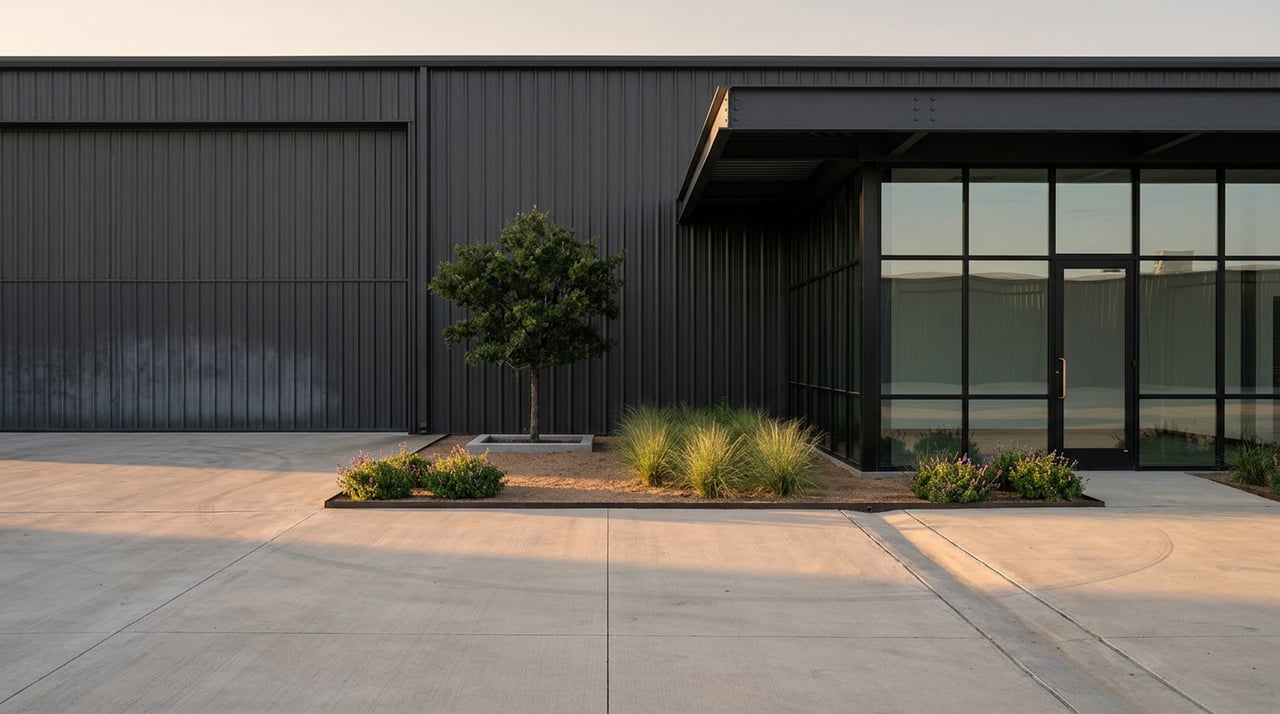
If you have pulled traffic counts, FBO details, or airport comps while underwriting a site at Waco International Aviation Park, stop and check which airport you actually pulled them from. Central Texas has two Waco airports with overlapping names and no overlapping geography, so it is important to distinguish them when reviewing a site.
Waco Regional Airport, the one with the American Airlines gate and the passenger terminal, sits on the south side of town. Waco International Aviation Park sits eight miles northeast of downtown, built around the Texas State Technical College (TSTC) Airport, identifier CNW. That airport began life as James Connally Air Force Base before TSTC took it over, and it still carries the bones of a military field: an 8,600-foot primary runway rated for wide-body jets up to 450,000 pounds, a control tower staffed seven days a week, and roughly 2,200 acres of airport property wrapped around the training programs TSTC runs on site. It is one airport. It is not the other one. The distinction matters because the tenant mix, the workforce pipeline, and the underwriting math at CNW have nothing to do with what is happening across town at Regional.
What actually happened at this airport in August 2025
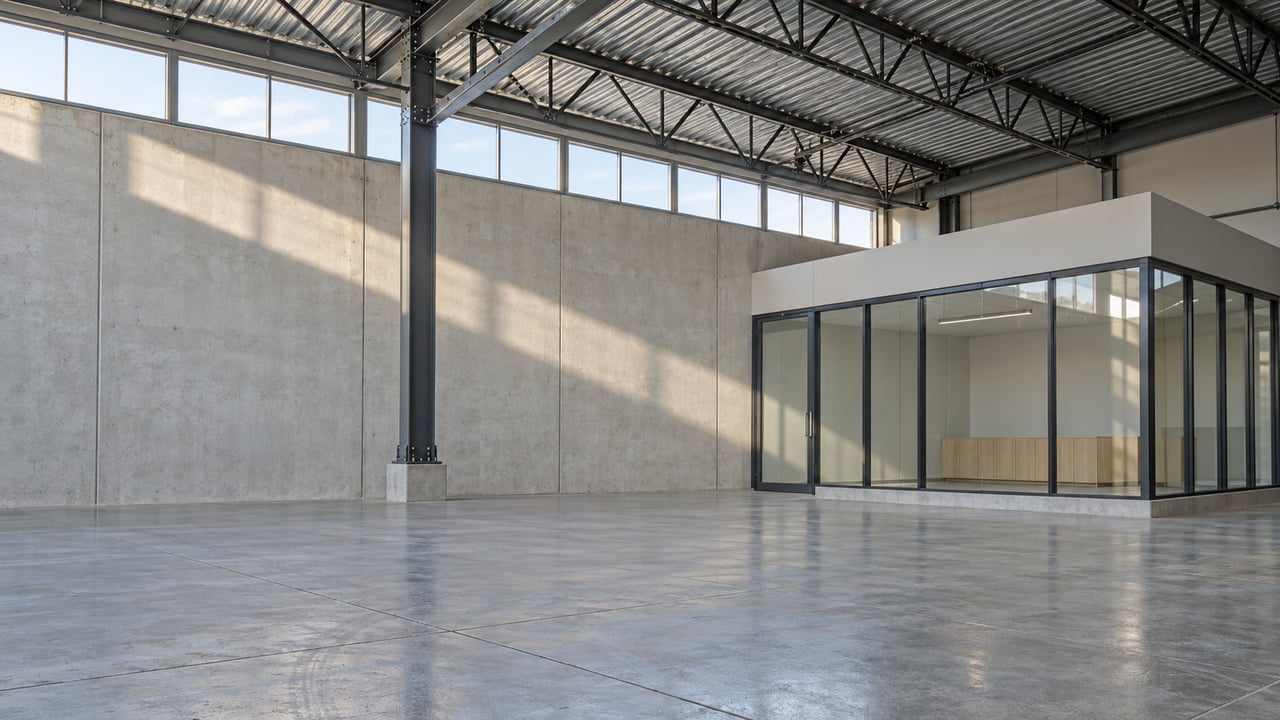
As KWTX reported, L3Harris Technologies cut the ribbon on an expanded production hangar at TSTC Waco Airport in August 2025, designated as the company's center of excellence for the OA-1K Skyraider II, a light attack and ISR aircraft built for U.S. Special Operations Command and allied militaries. Congressman Pete Sessions attended alongside L3Harris ISR president Jason Lambert and Waco general manager Sean Ling. Lambert described a workforce that was already "well over 900 people" at the Waco site and growing to meet the new production line, which is expected to deliver aircraft on a monthly cadence tied to a program that could be worth as much as $3 billion over its life. The expansion is expected to add roughly 70 new roles in the area, drawing on the same regional talent pool that TSTC's aviation and manufacturing programs are built to feed.
That number is worth sitting with. The Greater Waco Chamber, through the Waco Industrial Foundation, has reported that the park saw three separate capital investment announcements since 2020, together generating more than $75 million in new investment and creating over 70 new jobs across five years. The roughly 70 roles expected from the expansion are in a similar range to the 70-plus jobs reported across three announcements since 2020, though one figure is expected roles and the other is reported jobs.
| Cumulative, 2020 through early 2025 (reported) | August 2025 hangar expansion (expected) | |
|---|---|---|
| Jobs / roles | 70+ | ~70 |
| Announcements | 3 | 1 |
| Time span | 5 years | One ribbon-cutting |
The comparison highlights how one expansion can be similar in scale to job totals reported across several years.
How workforce and infrastructure factor into site planning
The Waco Industrial Foundation's own materials describe the park as roughly 1,100 acres with about 250 acres still available, utility-served, with regional detention in place and geotechnical work already done. Those numbers are real, and they are the ones most out-of-market buyers will anchor to first, because acreage is easy to picture and easy to compare against other parks.
Acreage is one consideration for a tenant evaluating the park. Hangar-grade infrastructure and a trained workforce are also factors to consider. TSTC's aviation and aerospace programs exist specifically to keep that pipeline full, and the same programs that supply L3Harris's technicians and engineers are the ones any other aerospace-adjacent tenant in the park would need to draw from. A program of that scale makes workforce availability a question for other prospective tenants to assess, even though the acreage figure on the flyer has not moved.
A listing sheet may not capture these workforce considerations. A buyer comparing Waco Aviation Park against another Central Texas industrial site on acreage alone is comparing the wrong variable. The real question is whether the workforce and hangar capacity needed to actually operate on that acreage are still there in the quantity a new tenant would need.
What is actually for sale right now
There is a specific parcel currently on the market inside the park that illustrates the tradeoff well: a former golf course site with three road frontages, on Aviation, Concord, and Tirey Roads, less than a quarter mile from Highway 84, and neighbored directly by L3Harris, Sherwin Williams, and AJ Nonwovens. It is relatively flat, forested, and already served by utilities, which is exactly the kind of shovel-ready description that shows up on nearly every industrial park flyer in the region.
What makes it different is the neighbor list. Sitting next to an active defense production line changes what a site is useful for and who else wants to be near it, in ways a generic acreage comparison will not capture. Aerospace suppliers, MRO operations, and logistics tenants tied to defense contracts often want proximity to an anchor like L3Harris specifically because it signals a stable customer base and a workforce already trained to the same standards. A tenant with no aerospace connection may find the same site less compelling for exactly the same reason.
What this means before you underwrite a deal here
Three things worth confirming before treating any acreage or job figure for this park as current:
- Confirm which airport a data point actually refers to. CNW and Waco Regional are not interchangeable, and third-party sources sometimes blur them.
- Ask the Waco Industrial Foundation directly for the current available acreage rather than relying on a flyer or listing that may predate the most recent hangar buildout.
- Ask what workforce commitments TSTC's programs already have on the books. A tenant hoping to hire from the same talent pool L3Harris is drawing from needs to know how much of that pipeline is already spoken for.
None of this makes the park a bad target. It means acreage is one consideration, alongside workforce and infrastructure absorption, when evaluating what you are buying into.
FAQ
Is Waco Aviation Park the same airport as Waco Regional Airport? No. Waco International Aviation Park is built around TSTC Waco Airport (CNW), northeast of downtown. Waco Regional Airport (ACT), which handles commercial passenger service, is a separate facility on the south side of the city. Confirm which one a data source is describing before using it in a comparison.
Is there still land available in the park? The Waco Industrial Foundation's most recently published figures put available acreage at roughly 250 acres out of the park's 1,100. That figure was reported before the August 2025 L3Harris hangar expansion, so a buyer should confirm current availability directly with the Foundation rather than treating a published number as fixed.
Does the TSTC workforce pipeline only benefit aerospace tenants? TSTC's programs at the Waco campus extend beyond aviation into precision machining, welding, and industrial systems, so the training pipeline supports a broader set of industrial tenants than aerospace manufacturing alone. A tenant outside aerospace should still confirm program capacity rather than assume the pipeline is uncommitted.
If you are weighing a site inside Waco International Aviation Park, or trying to figure out how a single anchor tenant's growth changes the calculus for the parcel next door, Kelly Realtors Commercial has been reading Central Texas industrial and aviation-adjacent deals since 1992. Let's Get Started.